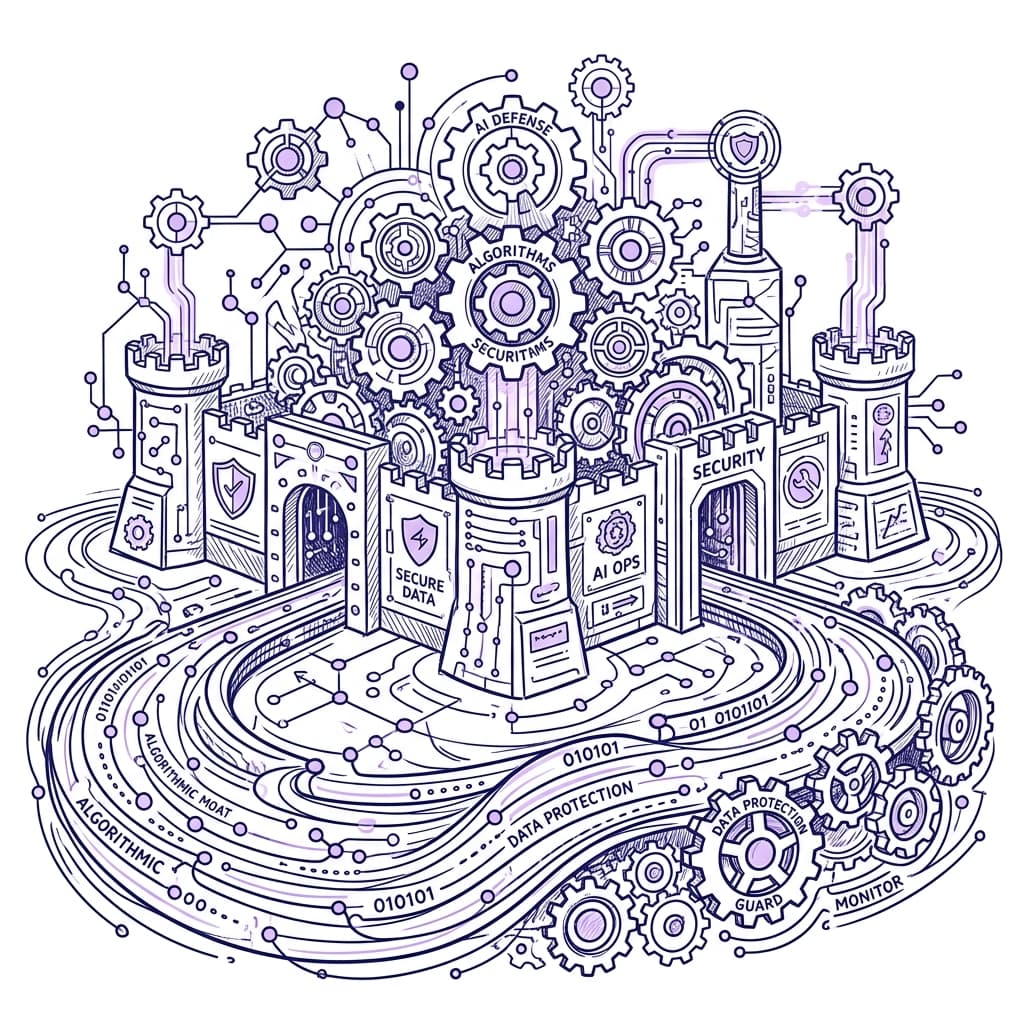

For decades, the classic enterprise moat was built on proprietary technology. If you had the best algorithms, the most advanced software, or the largest server infrastructure, you held a distinct, defensible advantage over your competitors.
Then came the democratization of Artificial Intelligence.
Today, the barrier to entry has evaporated. A startup with ten employees and an enterprise with ten thousand employees both have API access to the exact same frontier Large Language Models.
So, if everyone has the same core technology, has the moat disappeared entirely?
The answer is no. The moat hasn’t disappeared; it has completely shifted. In the AI age, your competitive advantage is no longer the availability of intelligence. It is the application of it.
The Shift from Technological Moats to Operational Defensibility
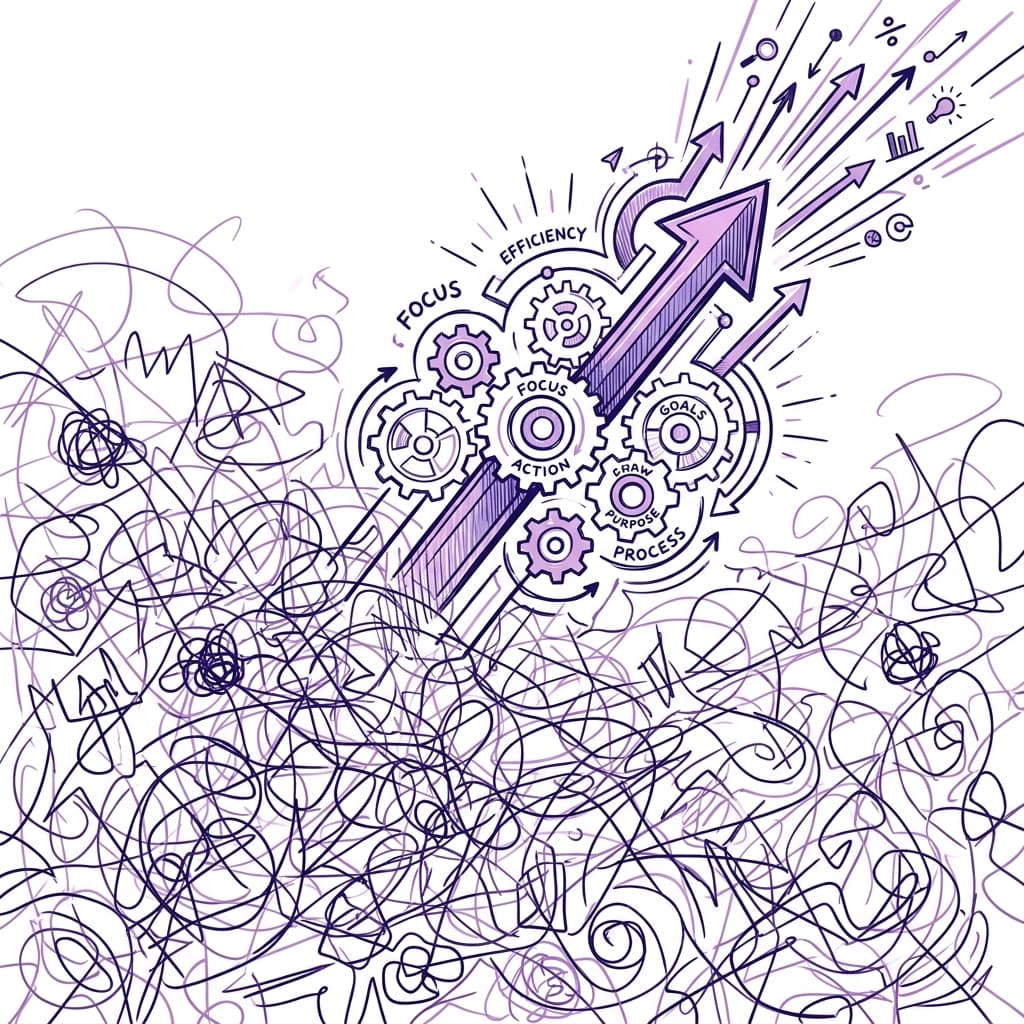
When technology is commoditized, speed of execution and AI-driven operational efficiency become the new battleground for enterprise survival.
I believe we are rapidly moving away from an era where organizations compete merely on building software. The new arena is how fast your human workforce can adapt, coordinate, and execute alongside that software.
I see this massive challenge daily when talking to legacy organizations. If your competitors can deploy AI to automate their administrative drag, but your teams are still bogged down in manual, 1990s-era logistics, the intelligence of your LLM simply won't matter.
Your new moat is building an organization that moves at the speed of the AI it deploys.
The Hidden Drag: Workforce Coordination
The greatest bottleneck currently restricting enterprise execution isn't a lack of ideas—it's the friction of coordination.
I speak with incredible operations managers in healthcare, security, and manufacturing every single week. They all share the exact same nightmare. They are some of the most high-value leaders in their company, yet they are burning dozens of hours cross-referencing availability grids against rigid labor laws, union constraints, and individual preferences just to publish a schedule.
When I see a brilliant manager playing a manual game of "Human Tetris" at 11 PM on a Sunday, I don't just see a frustrated employee. I see hours stolen from strategic growth, team leadership, and tactical execution.
If Organization A relies on manual scheduling logistics, and Organization B uses an automated AI enterprise shift scheduling software like Daywatch to compress a 20-hour process into a 2-minute automated execution, Organization B has mathematically widened its moat.
Organization B isn't just saving money on administrative overhead. They are fundamentally changing the velocity of their leadership tier.
The Daywatch Philosophy: Weaponizing Efficiency
I built Daywatch specifically because I couldn't stand watching this administrative friction hold back great leaders.
The organizations that survive and thrive over the next decade will be the ones that absolutely ruthlessly strip these manual, soul-crushing operations out of their management layer. They will treat time as their ultimate competitive advantage.
By allowing the machine to instantly handle the "Hard Logic" (compliance, labor laws, fatigue rules) and the "Soft Logic" (human preferences, shift trades, vacation requests), you liberate your management structure.
How AI-Optimized Workforces and Automated Scheduling Win
- Agility: When demand spikes or disaster strikes, an AI-coordinated workforce can pivot and re-schedule dynamically without triggering a 2-day logistical nightmare.
- Talent Retention: Managers who aren't exhausted by administrative friction are better leaders. Employees who have transparent, fair, and rapidly adaptable schedules don't leave.
- Execution Velocity: You can execute on new strategies faster because your leadership bandwidth isn't tapped out by routine grid coordination.
Ready to upgrade your enterprise shift scheduling?
Stop relying on spreadsheets. Let Daywatch manage the complexity.
Conclusion: Digging the New Moat
The technological moat may have flattened, but the operational moat is deeper than ever.
The organizations that will build the next great empires won't necessarily be the ones building their own foundation models. They will be the ones that best utilize AI command centers to clear the path for their workforce, allowing their human talent to execute with unprecedented focus.
The moat hasn't disappeared. It's just time to start digging in a different place.