
In the rush to keep up with the pace of the modern AI era, it’s remarkably easy to fall into the trap of simply pushing teams to work "harder." But true organizational speed today isn’t about effort or tracking more hours—it’s about focus. It is about how effectively we clear the path for our best talent to spend their energy on the signal, not the endless noise of daily logistics.
This is the essential shift from manual operations to strategic command.
The "Human Processor" Problem
We’ve already seen this deep transformation in software engineering. Over the past decade, developers have moved from focusing on the syntax of individual lines of code to designing the overarching systems and logic that drive them.
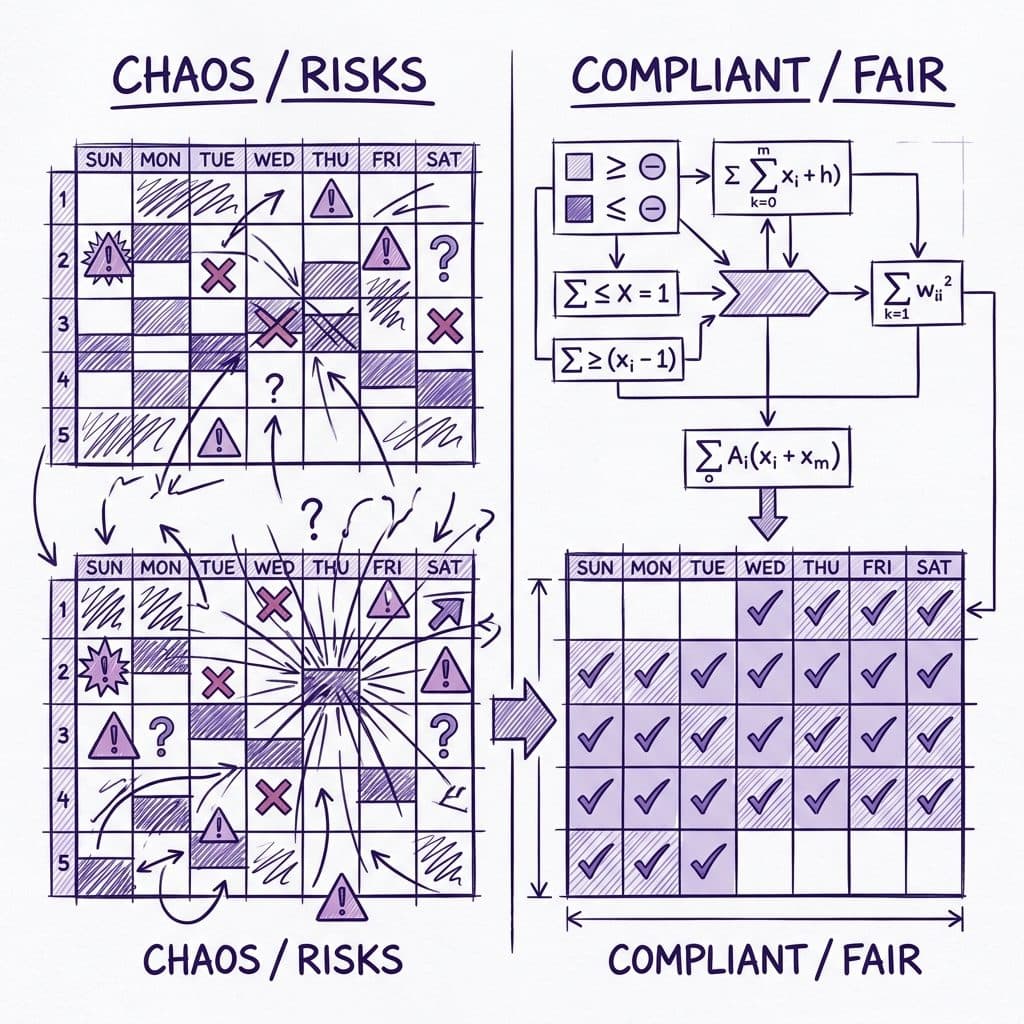
Now, the exact same principle applies to organizational design and enterprise scheduling. We must identify where our operational leaders are acting as "human processors"—wasting their cognitive bandwidth on manual tasks, SMS ping-pong for last-minute shift replacements, and manually cross-referencing Excel sheets against labor laws.
Working smarter means replacing those manual workforce management processes with intelligent, tailored systems. It is about returning managerial focus to where it matters most: team leadership, strategy, and business growth.
Transforming Complexity into Clarity: The Case of Daywatch
The development of Daywatch, an intelligent AI system for workforce scheduling built for both secure on-premise and agile cloud deployments, serves as a clear case study in this philosophy.
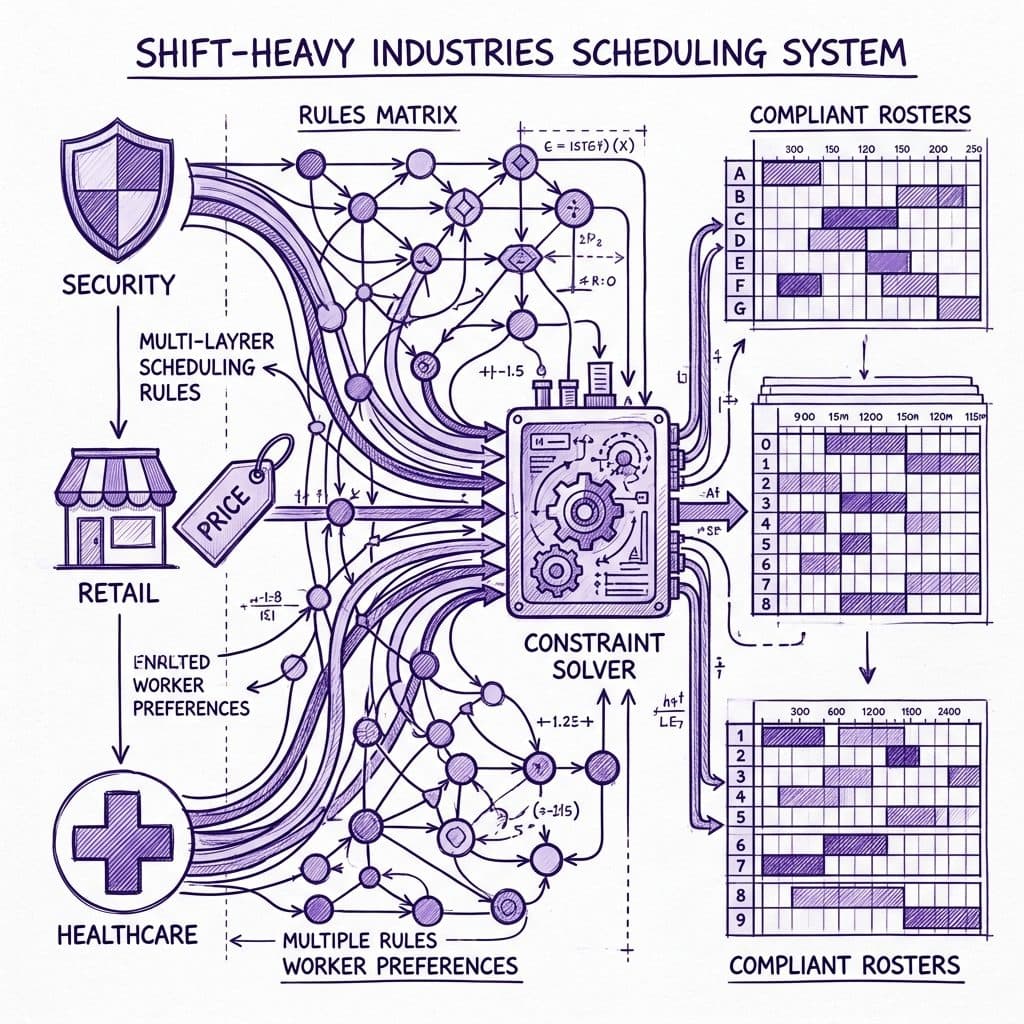
Designed for complex organizations with thousands of employees, Daywatch is built to automate the high-stakes, multi-dimensional puzzle of matching rigid organizational rules with dynamic human requirements.
In building Daywatch—and designing the broader infrastructure that powers modern solutions—we discovered that working smarter means turning enterprise complexity into operational clarity.
We focused on four foundational pillars that allow leaders to maintain their focus:
1. Trust Through Transparency
For any automation to succeed in a high-stakes operational environment, managers need to be able to see and trust the internal logic of the AI. Black-box algorithms create anxiety. When leaders can transparently see why a scheduling decision was made, they trust the system. And when you trust the system, you don’t have to waste focus or mental energy double-checking it.
2. Strategic Oversight vs. Micro-Management
By utilizing visual dashboards to assess optimality at a glance, we move the manager's focus away from individual spreadsheet cells and back to high-level strategy. Instead of asking "Who is working Tuesday morning?", leadership can step back and analyze overarching coverage gaps, optimize budget utilization, and predict long-term hiring needs.
3. Automated Validation and Compliance
The cost of compliance errors is massive. Intelligent scheduling provides instant alerts when shift reality clashes with corporate policy or strict labor laws. This ensures that a manager's attention is only called upon when a genuine, strategic decision is needed, not for routine regulatory checks.
4. Balancing Hard vs. Soft Logic
Enterprise scheduling involves a friction between non-negotiable labor constraints (Hard Logic) and individual employee preferences, burnout levels, and time-off requests (Soft Logic). By allowing the system to instantly calculate and balance the variables, the algorithm handles the mathematical complexity while the leader focuses on handling the team.
Ready to upgrade your enterprise shift scheduling?
Stop relying on spreadsheets. Let Daywatch manage the complexity.
Reclaiming Focus: The True ROI of Intelligent Systems
The real transformation isn't just about efficiency; it’s about reclaiming focus.
It is the vital shift from a leader who is mentally exhausted by complex logistics to one who has the capacity to lead with intent and focus on the mission. When you remove the friction of workforce optimization, you don't just eliminate an administrative chore; you unlock the full potential of your management structure.
Whether deployed via the agility of the SaaS cloud or locked down within absolute on-premise isolation, we ensure that this massive leap in productivity never comes at the cost of your organization's unique security and data sovereignty needs. Working smarter means letting the machine do the processing, so the human can lead.