
Shift-heavy industries live in a state of constant logistical motion.
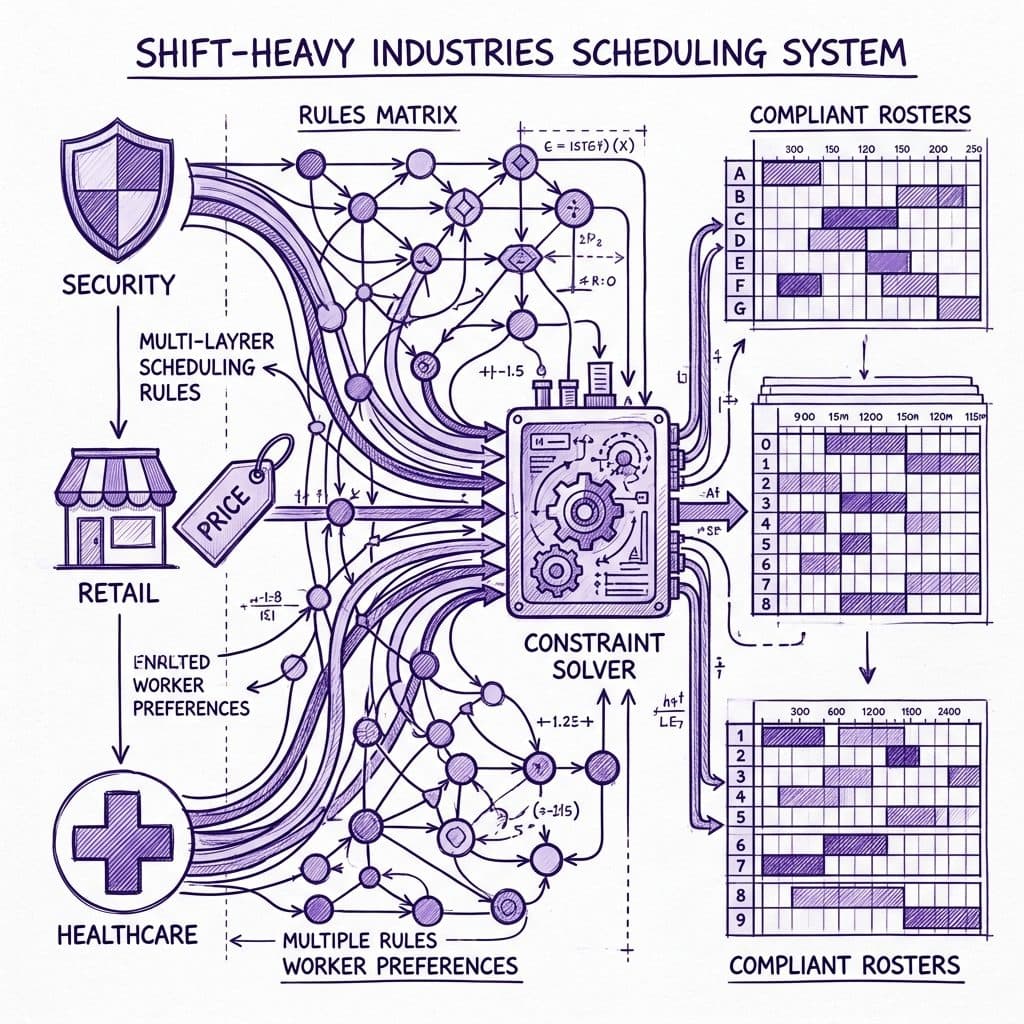
In retail, security patrol services, and healthcare settings, a roster isn't just a calendar—it is a critical operational machine. You are dealing with multiple locations, fluctuating staff availability, complex skills-mix requirements, and various local labor policies.
Attempting to reconcile all these constraints manually leads to massive operational friction, delays, scheduling gaps, and administrative exhaustion.
To solve this, modern enterprises are deploying Daywatch, a state-of-the-art constraint-based AI workforce scheduler for shift-heavy industries. Here is how we turn chaotic operational rules into optimal, instant schedules.
The complexity of shift coordination scales exponentially with every new rule. Daywatch keeps that complexity constant—instantly resolving rosters in seconds.
1. The Multi-Layered Scheduling Problem
In shift-heavy sectors, scheduling requirements stack up in layers:
- Operational Demands (Hard Rules): Minimum staffing levels per role, required site certifications (e.g., senior guard or certified nurse), and strict time slots.
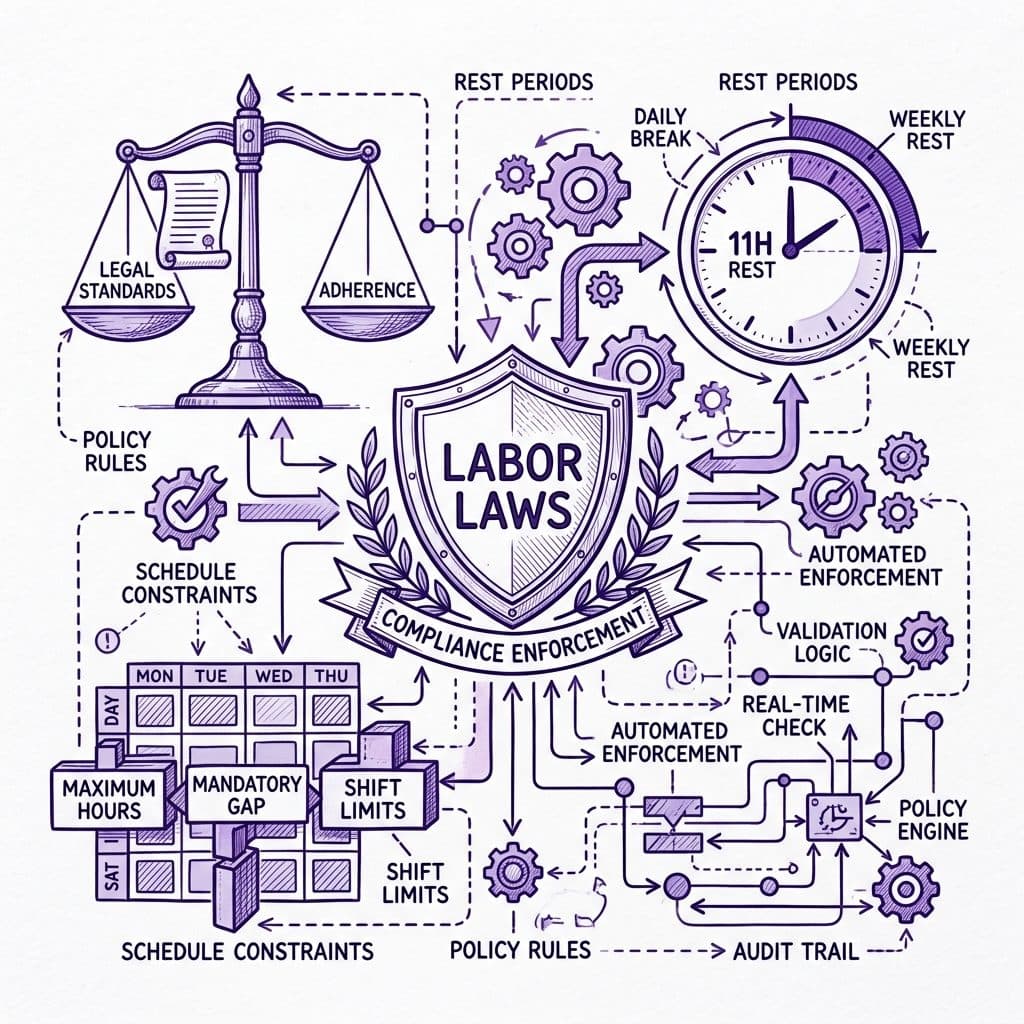
- Legal Regulations (Hard Laws): Mandatory rest hours, overtime thresholds, and maximum consecutive workdays.
- Human Preferences (Soft Guidelines): Preferred shift timings, weekend off requests, and team pairing preferences.
In a traditional scheduling system, a change in one layer triggers a domino effect across all other layers, forcing the manager to rebuild the roster from scratch.
2. Instantly Compiling and Solving the Roster
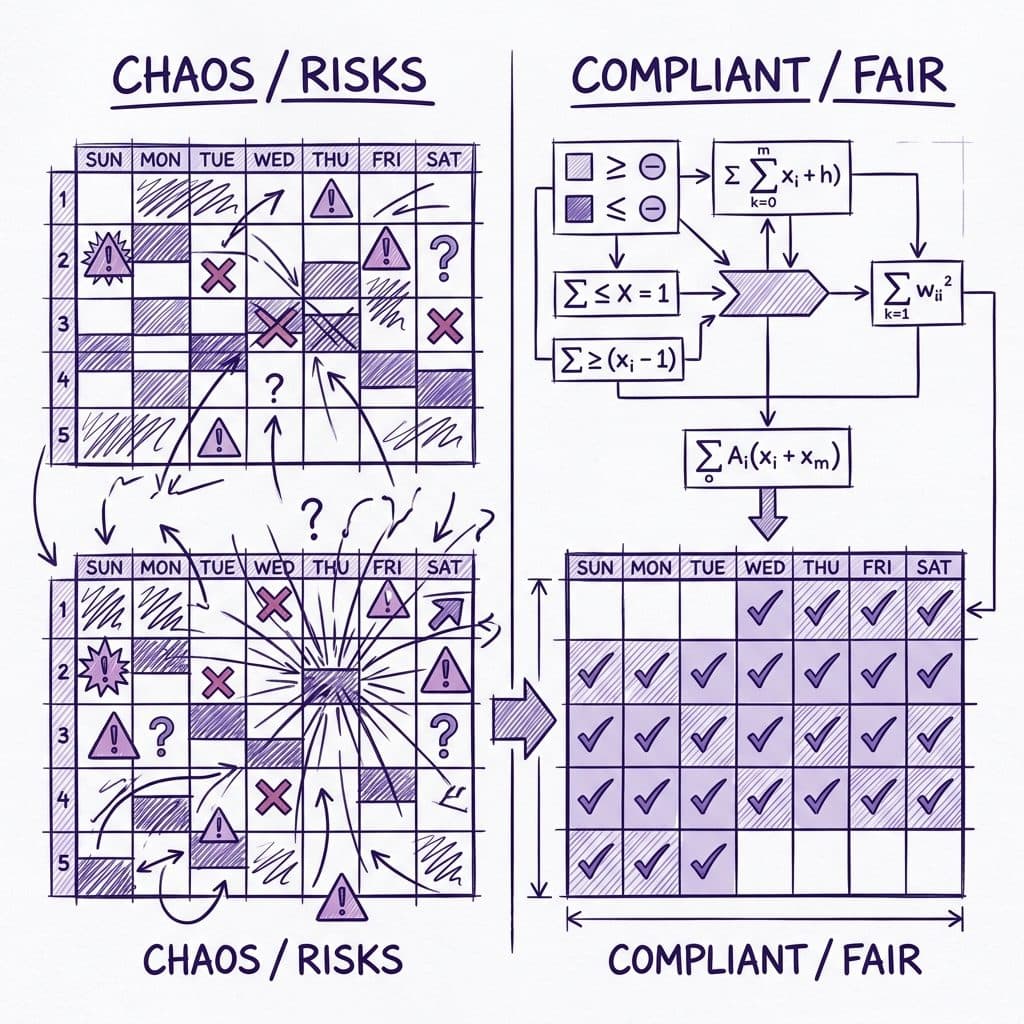
Daywatch replaces manual guesswork with Mixed Constraint Programming.
Instead of searching for a schedule trial-by-error, Daywatch translates all rules and availability into mathematical inequalities. Our engine evaluates the search space (which represents billions of possible worker combinations) and resolves it to find the globally optimal layout in a fraction of a second.
This mathematical rigor ensures that:
- All legal constraints are 100% satisfied.
- Operational coverage is fully met, with zero understaffed slots.
- Soft preferences are maximized across the entire team to distribute weekend shifts and undesirable hours as fairly as possible.
3. Tailored to Shift-Heavy Industries
Every sector has its own scheduling fingerprint. Daywatch adapts natively to the unique requirements of your industry:
Security Patrols
Ensuring that high-risk sites always have senior guards with proper fire-arm licenses, preventing fatigue for guards working consecutive night patrols, and balancing geographic coverage.
Retail Logistics
Aligning shift generation with peak foot traffic hours, managing seasonal staff ratios, and adapting to last-minute shift swaps during peak shopping days.
Healthcare Services
Managing complex clinical rotations, ensuring nurse-to-patient ratios are compliant, and tracking certifications (e.g., ACLS or BLS) dynamically so that every ward has adequate coverage.
Scaling Operations with Command
A manual scheduling workflow limits your organizational agility. By migrating to a constraint-based AI workforce scheduler for shift-heavy industries, you decouple operations from administrative bottlenecks. Managers can deploy changes instantly, labor compliance is guaranteed, and teams are happier with balanced schedules.
See how Daywatch can streamline your enterprise roster process by exploring our pricing plans or launching a trial.